| Length | 0 m |
| Diameter | 0 cm |
| Dry Mass | 0 Kg |
| Max Thrust | 0 N |
| Apogee Reached | 0 m |
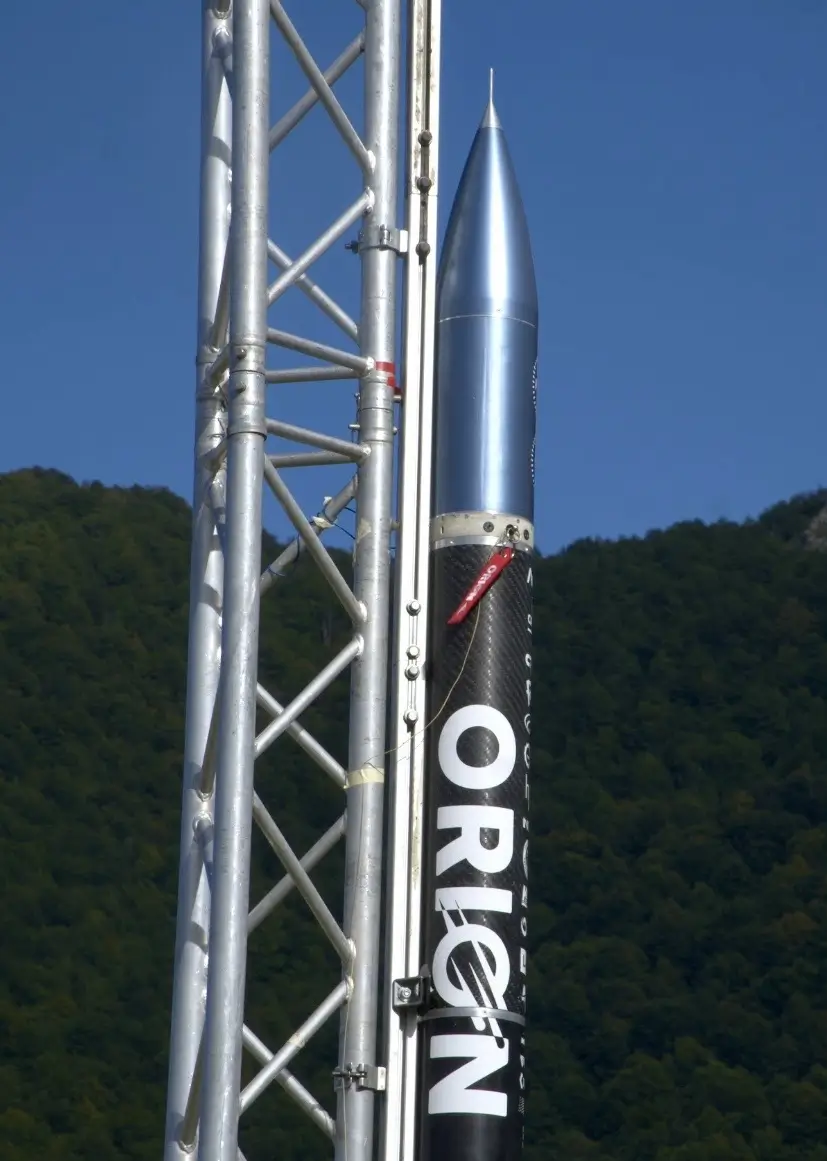
Orion is the fifth rocket of Skyward Experimental Rocketry’s Constellations Program, designed to perform in the 3000m Hybrid category at EuRoC 2025.
While inheriting the technical legacy of Gemini and Lyra, Orion represents an evolutionary leap in robustness and efficiency. Featuring a full Carbon design with refined aerodynamics and a tapered tail, it integrates a nitrogen pressurization system and completely renewed avionics for the first time.
However, the true essence of Orion lies in its operational resilience. At EuRoC 2025, following a non-nominal first launch caused by an engine anomaly, the rocket was recovered, overhauled, and relaunched in less than 26 hours. This second flight bordered on perfection, reaching an apogee of 2990.6 meters—less than 10 meters off-target—and landing just 18 meters from the objective thanks to the guided parafoil system.
Awarded the Design Award for its exceptional engineering and rapid reusability, Orion is not just a rocket; it is a testament to Skyward’s ability to innovate, adapt, and deliver precision under pressure.
| Length | 0 m |
| Diameter | 0 cm |
| Dry Mass | 0 Kg |
| Max Thrust | 0 N |
| Apogee Reached | 0 m |
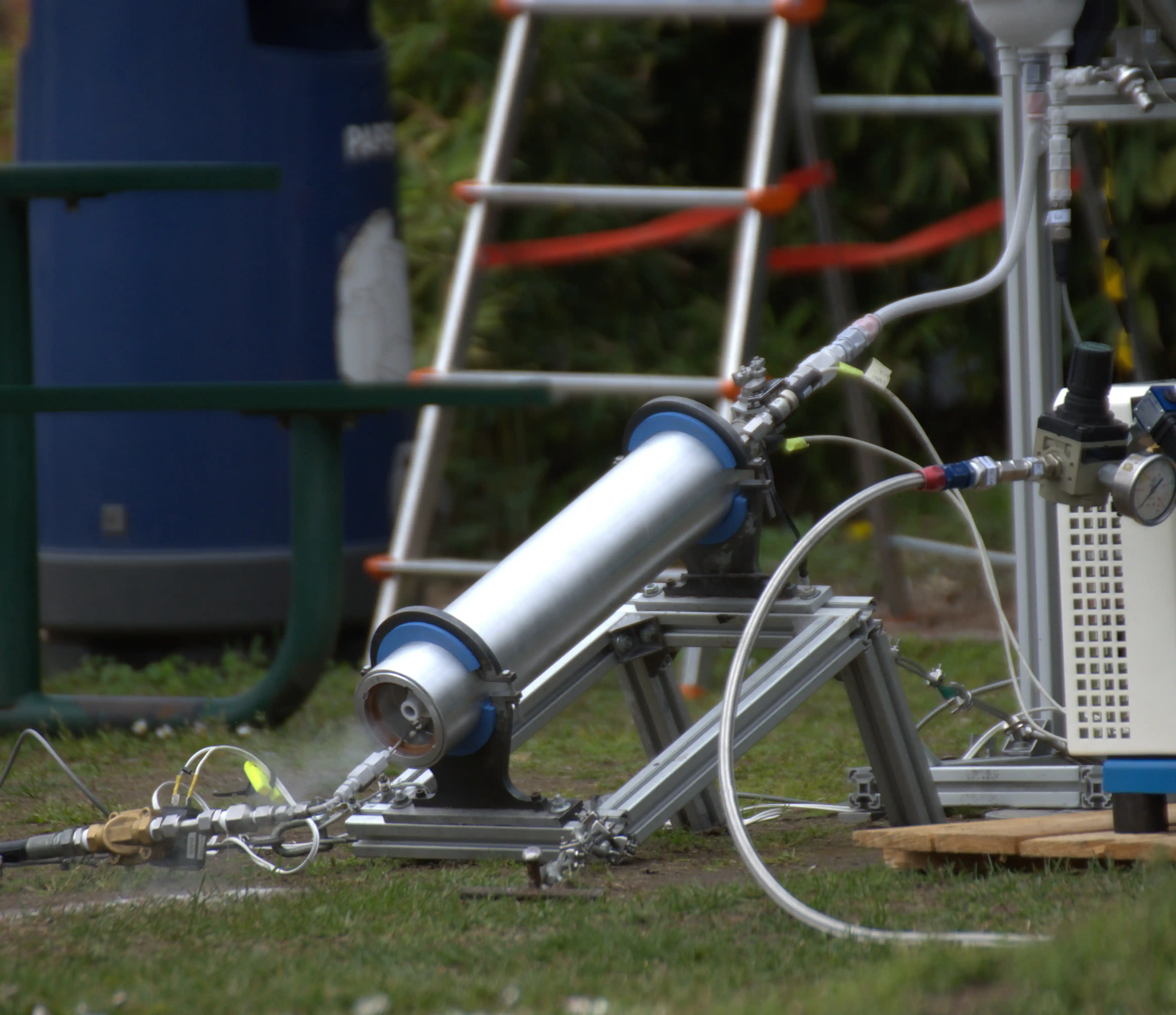
Orion is powered by a SRAD hybrid rocket engine. Its main innovations include an external pressurizer, a cold refueling, a variable-infill “Armored Grain” and a quenching line. The external pressurizer is used to pressurize the oxidizer tank and, in comparison with a self-pressurized system, guarantees a much more stable pressure and therefore a constant mass flow rate, and represents an important step towards longer firing times. The external pressurizer also allows to load the nitrous oxide at a much lower temperature than before, significantly increasing its density and therefore decreasing the tank size. The remaining nitrogen used to pressurize the tank can then be used to quench the combustion chamber and cool it down. Lastly, the variable-infill “armored grain” consists of a paraffin wax fuel grain with a 3d-printed ABS gyroid structure, that not only increases the mechanical properties of the grain but also regulates its mass flow rate to achieve a more efficient combustion.
The Orion project is aimed at improving the previous rocket Lyra incorporating innovative design solutions to enhance performance and reliability.
One of Orion’s most groundbreaking advancements is the fincan’s one-piece carbon fiber composite construction, featuring integrated fins for enhanced structural continuity and aerodynamic performance. The transition from a modular design to a single composite unit delivers multiple benefits:
Enhanced Structural Integrity: The seamless design eliminates stress concentrations and weak points at fin interfaces, ensuring more uniform load distribution and reducing the risk of structural failure.
Optimized Weight Reduction: By removing the need for aluminum rings and connectors, the overall weight is significantly reduced, resulting in a higher thrust-to-weight ratio and improved efficiency.
Refined Aerodynamic Profile: A carefully engineered streamlined curvature, extending from the base, minimizes drag, further enhancing the rocket’s stability and performance during flight.
The payload cap has been engineered to achieve the perfect balance between lightweight construction and structural strength. Made from PA12 nylon with a honeycomb pattern, it provides significant weight reduction without sacrificing durability. To further enhance its performance, the cap is reinforced with two 1 mm-thick carbon fiber plates, which encase the honeycomb structure for exceptional rigidity and resilience under stress.
A major advancement this year is the integration of antennas directly laminated into the composite structure of the CubeSat fuselage. By laminating the antennas into the fuselage, the system benefits from improved durability, performance, and structural efficiency. Additionally, the laminated antennas enhance electromagnetic transparency in critical areas, ensuring consistent signal strength and reliability for communication and navigation systems.
The pressurization system of the Orion project introduces an innovative design that reduces the nitrogen tank pressure, enabling safe and efficient oxidizer tank pressurization. Key advancements include 3D-printed aluminum adapters for optimized strength-to-weight ratio, compact dimensions, and seamless integration. Additionally, the system features real-time pressure monitoring and topologically optimized supports to withstand flight loads, ensuring reliability and performance during rocket operations.
Efficient and effective communication between Orion and the ground station is achieved through the use of antennas, designed with the goal of enhancing performance and reliability. To better suit the use and needs of our system, telemetry in different bands and a set of custom antennas have been developed for the Rocket’s electronics. In particular, 433MHz and 868MHz bands are used for main events and 5.8GHz bands are exclusively dedicated to transmitting the analog video feed.
Ground communications will be received independently by both a manual and an automatic set of antennas. This autonomous antenna, or Autonomous Rocket Pointer (ARP), was designed to eliminate the need to manually adjust the antenna orientation in order to receive telemetry data from the rocket during its flight. Control algorithms allow ARP to successfully predict the position of the rocket relative to the antenna and move the antennas accordingly and autonomously to maintain optimal data reception.

Electronics and Stack Orion’s electronics system is divided into three main subsystems, designed to maximize modularity, reliability, and efficiency:
This subsystem, located in the engine bay, manages the servo-actuated valves, pressure sensors, and thermocouples, ensuring safe operations during refueling, venting, and engine performance.
Housed in the main electronics bay, the SRAD system runs essential algorithms to control air brake actuation, parachute deployment, and telemetry transmission. A stand-alone COTS board ensures redundancy, while onboard cameras capture flight data for analysis.
Responsible for guiding the parafoil parachute, this subsystem ensures precise recovery of the payload to pre-set GPS coordinates, incorporating additional sensors and actuation mechanisms for controlled descent.
The system is built around a modular motherboard-daughterboard architecture. The motherboards manage power distribution, communication, and critical system interfaces, while the daughterboards host key components such as the Compute Unit, sensors, and radio modules for reliable data processing and transmission.
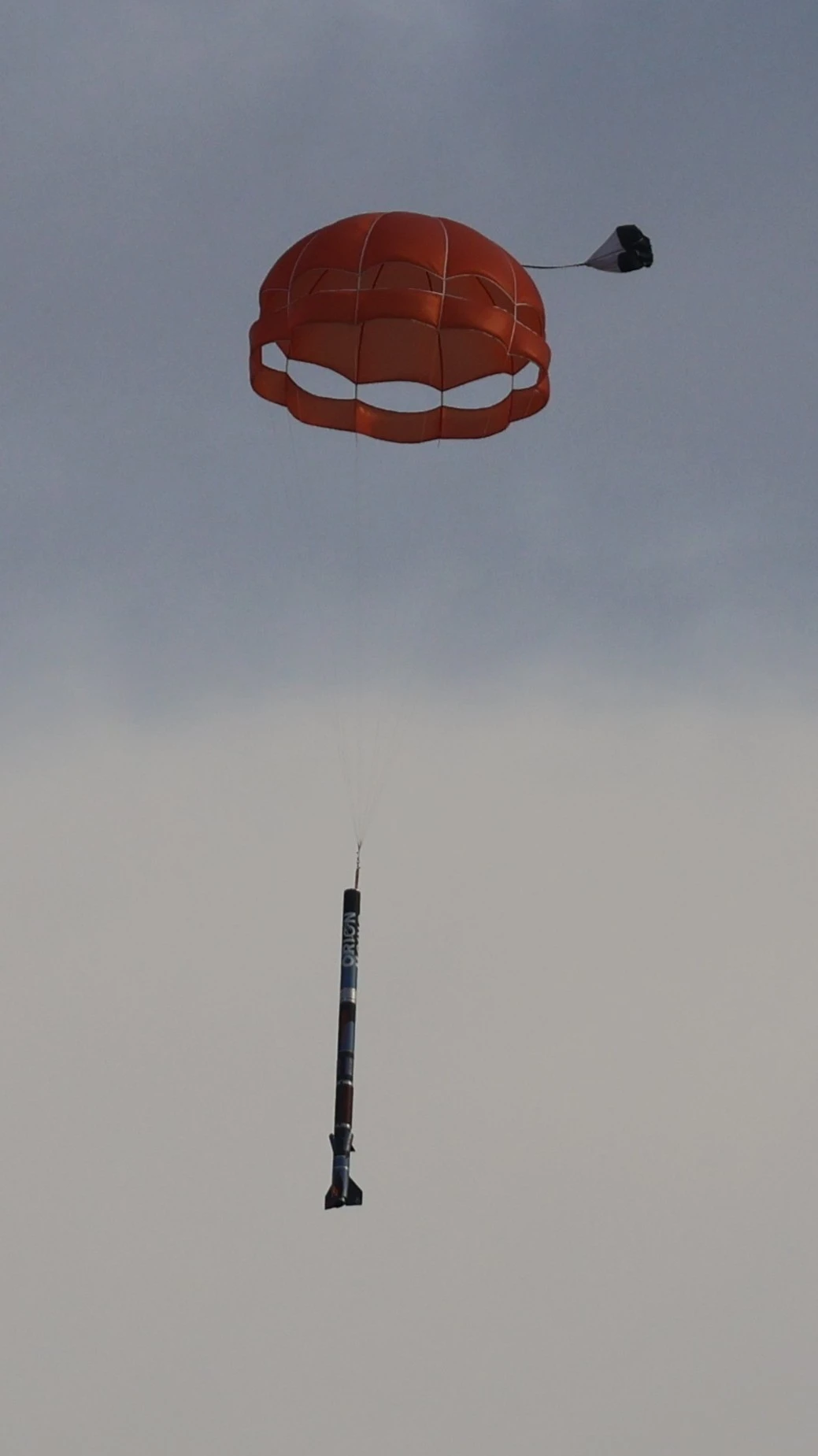
The recovery system of the Orion rocket is composed by two separate parachute descents. The launcher comes back to the ground thanks to a double-staged recovery phase. The first parachute is a drogue parachute that allows for a fast and steady descent; the last bit of the descent is taken care by a Disc Gap Band parachute. It allows for a soft landing, low opening shocks and a stable flight. This is achieved through its peculiar feature, a band that allows air to flow out from the canopy. The Parafoil Bay is recovered by a Parafoil wing, also following a double-staged descent. The Parafoil wing is capable of generating lift, making it have great gliding capabilities and precise handling and control. Thanks to the data gathered by the electronics and the actuation set by the flight computer algorithms, the Parafoil system is able to reach the predetermined target autonomously, allowing for a safe and precise landing.